Category Archives: Cooking

Chocolate Stout Bread Pudding

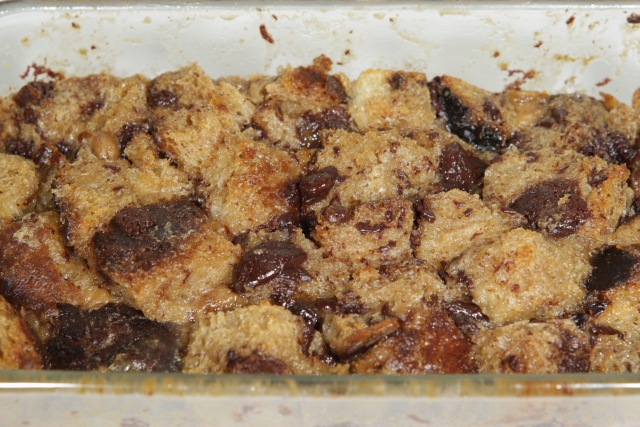
Chocolate stout bread pudding

I tried this recipe again with some left-over bread from Gumbo’s. And it is amazing how differently it turned out during the making of it. This time, I reduced an entire 14 ounce can of Young’s Double Chocolate Stout to a couple of ounces. I took the pan off of the burner and added 4 ounces of chocolate chips. After melting and mixing the chocolate into a smooth consistency, I added 3/4ths of a cup of brown sugar (whoops, it should have been 1/4). I then added a cup of cold heavy cream. And added three beaten eggs.

This time, the mixture had a consistency of pudding! It even tasted like it (yes, I risked salmonella poisoning to try it). It was pretty good. Because I didn’t have enough dried bread cubes, I cooked the leftover mixture in the oven along with the bread pudding. And this is what it turned into. The volume almost doubled. The only negative thing about it was a little bit of water that seeped out during eating. This thing looks like a brownie. And I wonder if eating it with the soaked bread cubes will make it seem even more like a brownie…

Chocolate covered strawberries

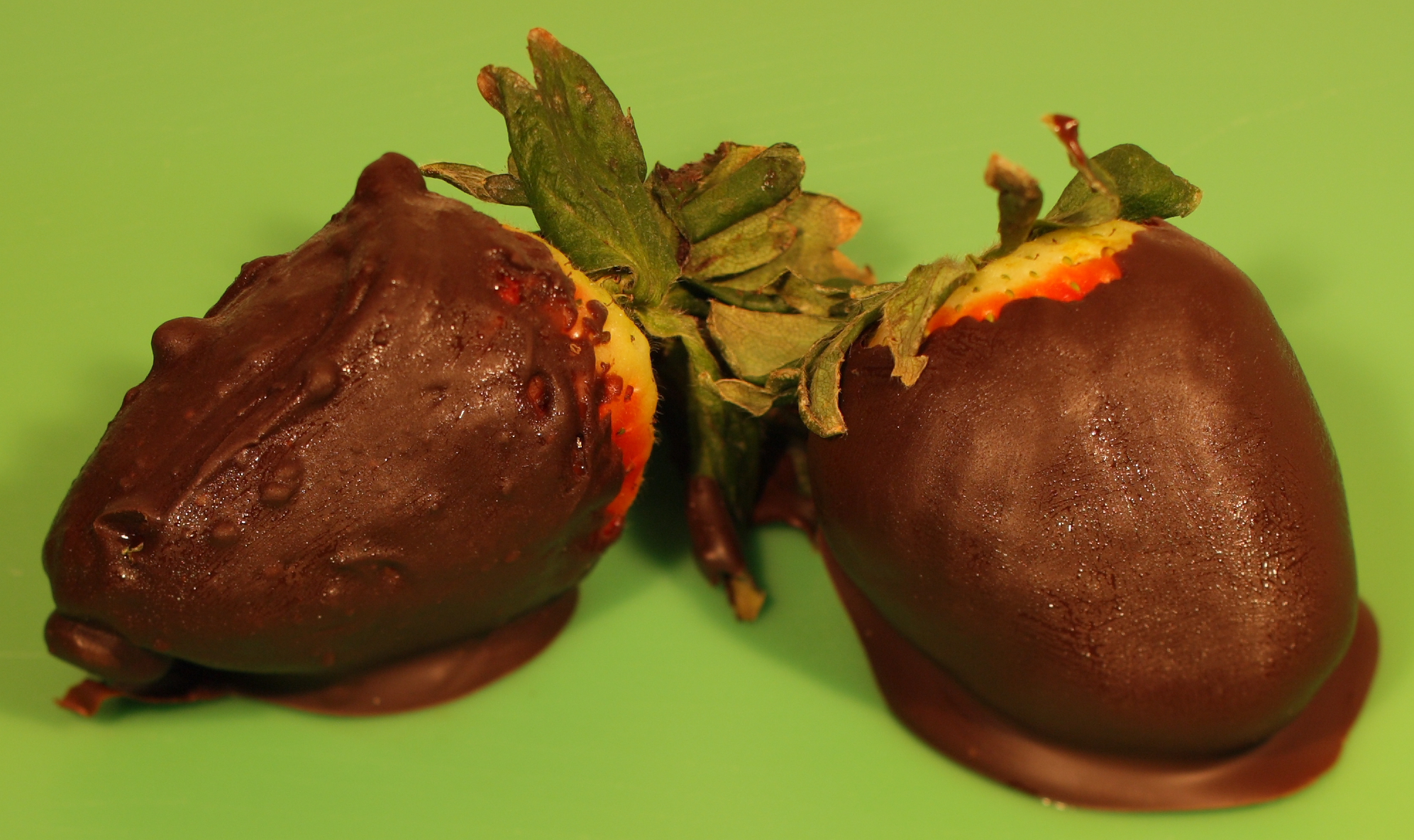
Chocolate covered strawberries

I’ve been wanting to make some chocolate covered strawberries and this weekend, I finally took the plunge. I have learned a lot of things in the process.

The first rule is Mise en Place. Prepare everything before you start cooking. For example, do not wash and dry the strawberries as you individually place them in the chocolate. This only slows down the cooking and can lead to burned things.

Watch the melting chocolate in a double broiler carefully. Once the water comes to a boil, turn it down to a bare minimum. Do not let the chocolate get too hot. Do not let the water run out in the broiler section. This only allows the top to get hotter and discolors the pan.

Do not attempt to rescue chocolate that has too much moisture cooked out of it (see above for reasons why this might have happened). Adding wet or dry goods to hot chocolate will cause it to seize. And now you have lost the tempering. A broken chocolate looks a lot different than tempered chocolate.

And in taking this picture, I have learned some things about food photography. I need a props library. I only have one set of plates, a section of marble, and some plastic cutting mats. These are not very photogenic items.

I can see why you need food stylists. The strawberries have been sitting in the refrigerator and collected condensation. Wicking away the moisture with a napkin was fun. Also, some moisture has weeped out of the strawberries. I had to clean up that mess after the strawberries were in place.

Hot halogen lights will melt chocolate. Set up the camera and the lighting, with a dummy in place to work on focus, color balancing and placement. At the last second, transfer the strawberries in and take photos.

I also tried soaking a batch of strawberries in Wild Strawberry Schnapps before covering them with chocolate. The liquor was not as intense as I hoped it would be. Maybe, for the next time, I need to think about ways to get rid of the moisture in the strawberries before I attempt to replace it with flavored alcohol. Perhaps with salt? Or maybe a food dehydrator?

Chili pizza

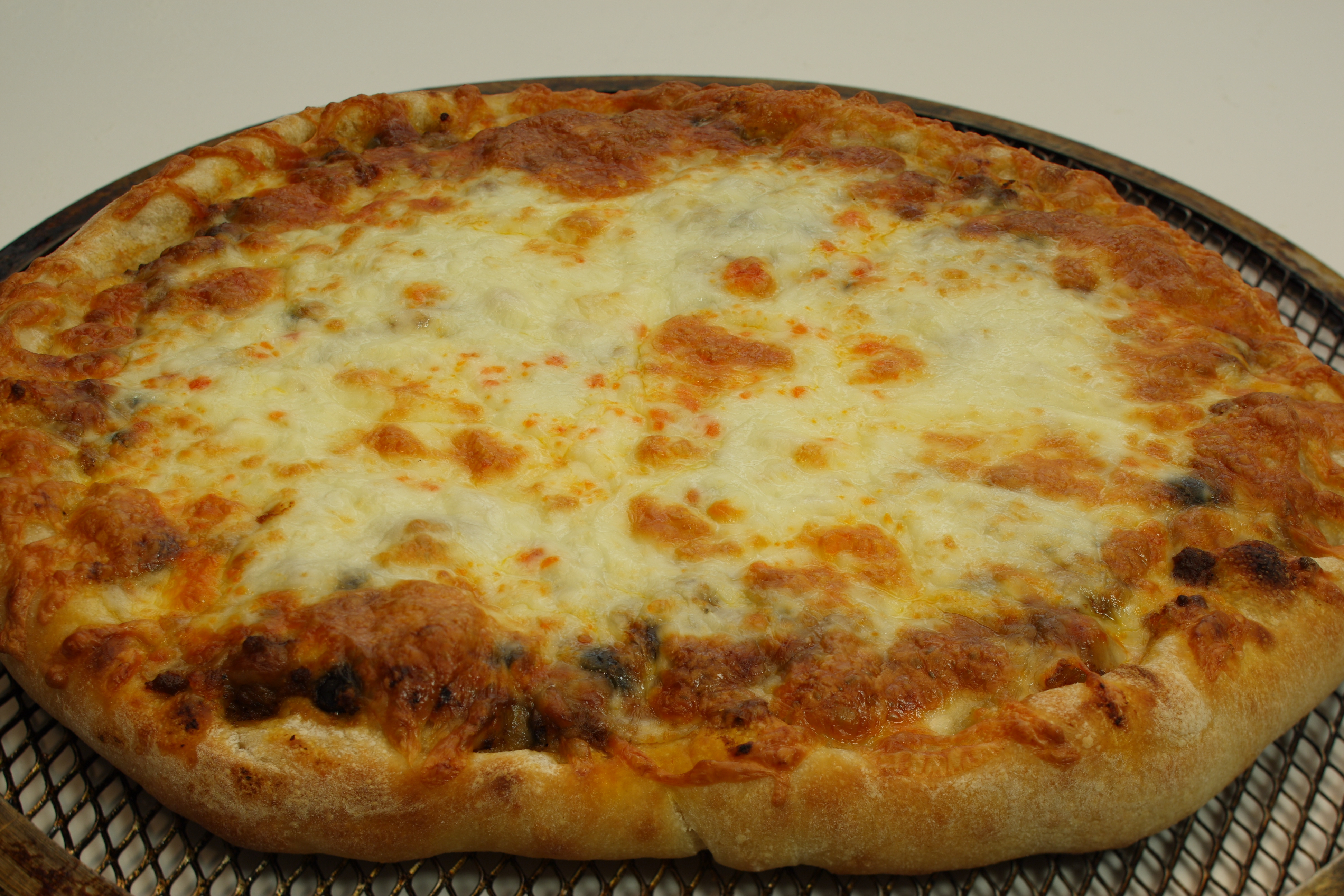
Chili pizza

A friend of mine gave me some venison which I used to make chili. So, in an effort to get rid of the leftovers, I used the chili for a pizza. It was not bad at all. Although it would have been better with some raw onions and Cheddar cheese.

You know, for the next pizza, I am thinking on using rice in some form. Perhaps a risotto? I need to search for some recipes that use rice and cheese…

Chocolate Stout Bread Pudding

Chocolate Stout Bread Pudding

Of course, after eating a couple of slices of hot bread with butter, what else does one do with a loaf of bread? I made a B.L.T. sandwich. And then cut the rest into cubes to dry over a couple of days.

Besides the usual cream and eggs that your basic pudding, this recipe adds beer. I used Young’s Double Chocolate Stout. How many calories does it have? Does really it matter when you sinfully indulge yourself?

HDR Sourdough bread

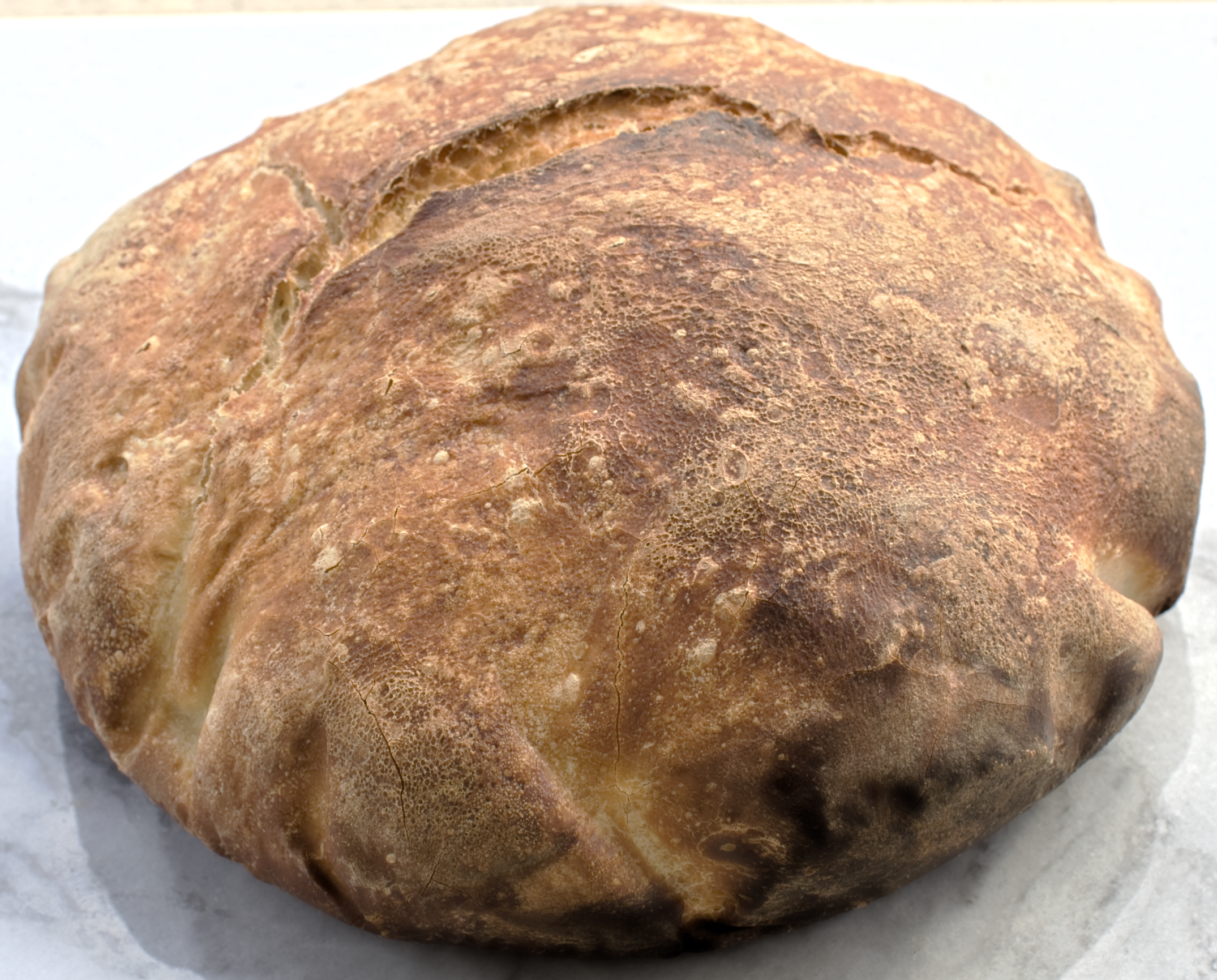
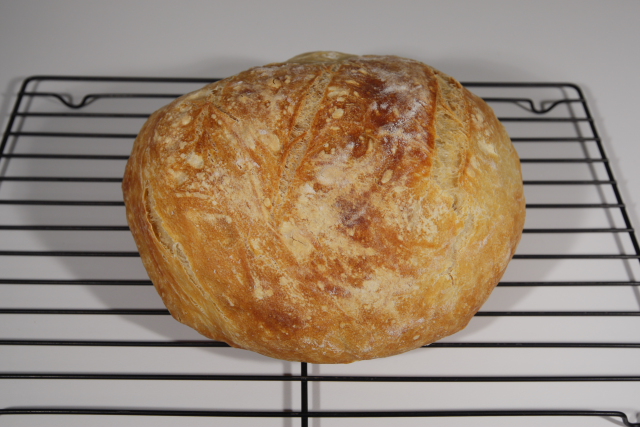
HDR Sourdough Bread

Its been a while since I have made some bread. So, on the sourdough life cycle N – 2 (where N was sleep in the refrigerator and N – 1 was pizza dough), I created this version. The recipe was:

  • one and a half teaspoons of salt
  • seven ounces of water (mix the Kosher salt until the crystals dissolve)
  • three ounces of active sourdough culture
  • fifteen ounces of flour (by weight)
  • mix until homogeneous (I had to spray some water because of uneven mixing)
  • cover with saran wrap and let rest overnight
  • knead the dough and place on strip of parchment paper. Cover and let rise for six hours
  • place a Le Creuset Dutch Oven into the oven and preheat to 500 degrees
  • place the bread inside the Dutch Oven and reduce the heat to 425
  • bake for thirty minutes, remove the bread, and place directly on the rack
  • bake for twenty five more minutes

Dulce de Leche sugar cookies

Dulce de Leche sugar cookies

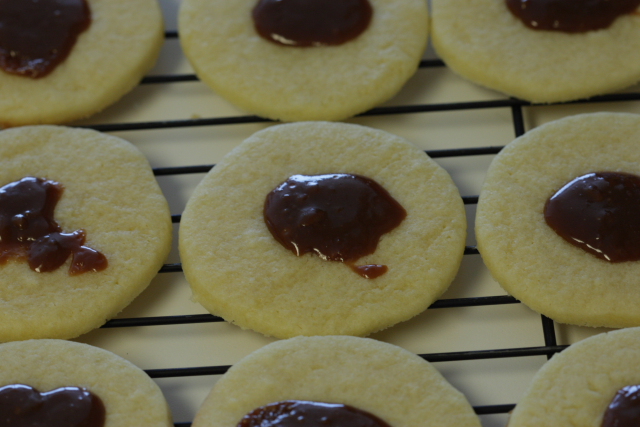
And what do you know, here are some sugar cookies to the rescue. I was a little worried during the baking. Because, when I heated up the Dulce de Leche in the microwave, it bubbled all over the place. But it was rather refined in the oven.

Dulce de Leche

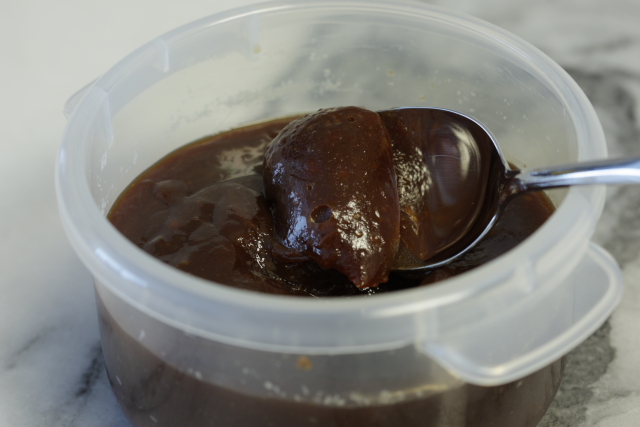
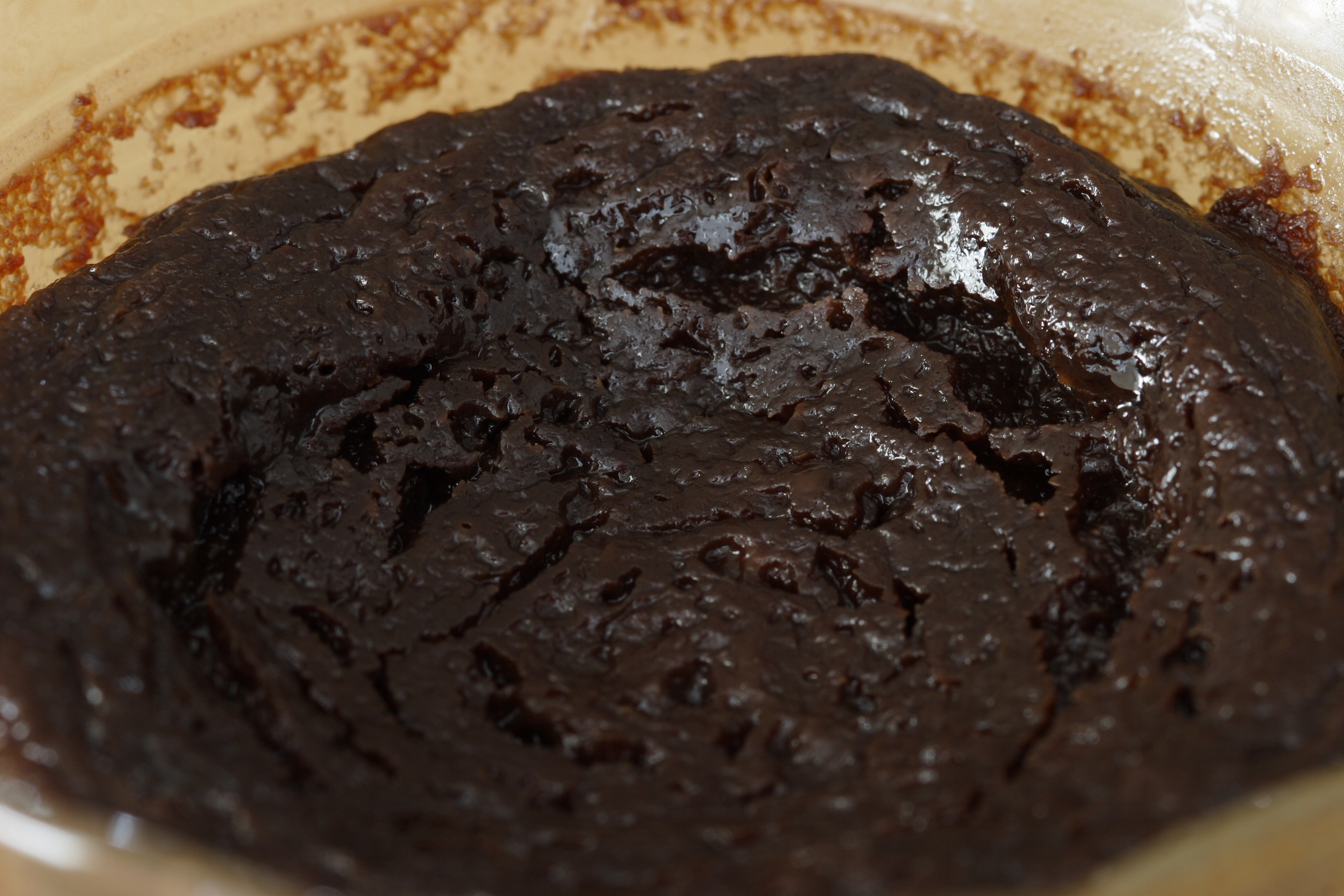
finished Dulce de Leche

So soon after making caramel, I am off trying out another version. Why so quickly? It was this recipe which inspired me. And also just how easy the preparation was. Above is the result. Although, if I could take that picture over again, I would have somehow raised the spoon to show off more of the texture. It just blends in with the mixture too much right now.

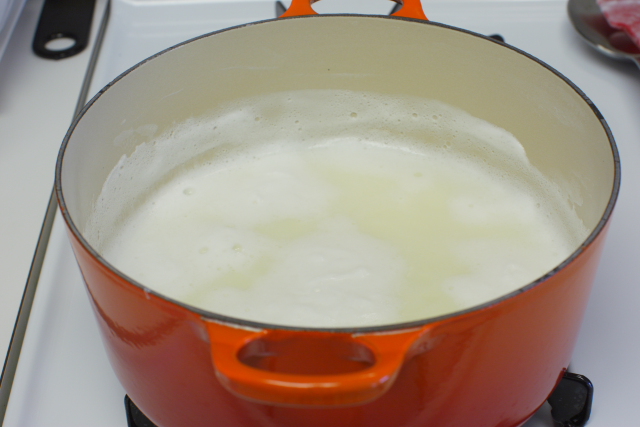
Stage beginning
Stage middle
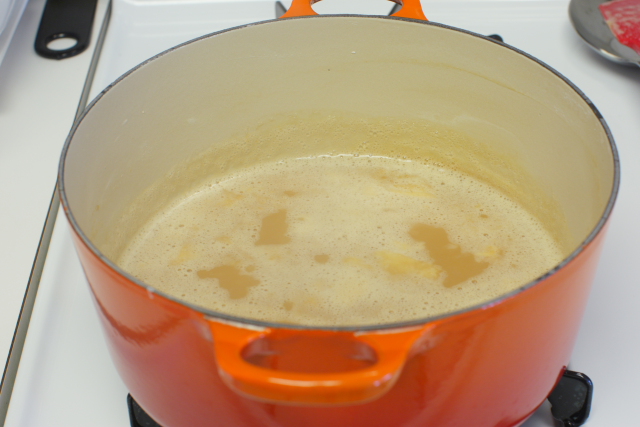
Stage end

You start off by heating a quart (four cups) of milk and a cup of sugar in a pot with large sides until it moderately simmers. Why use large side, you ask? It is because boiling milk will bubble over. And also, because when you add 1/2 teaspoon of baking soda dissolved in water to the milk it will seriously bubble up!

Now a classical recipe of Dulce de Leche is just milk and sugar. So why then is baking soda added? Because Alton Brown explains that it prevents the whey proteins from coagulating and forming gritty particles. It will also increase the acidity of the mixture and promote browning.

All you have to do after stirring down the bubbling mixture from the baking soda is to wait. And wait. And wait. The liquid will reduce and darken. And it is up to you just how dark and how reduced you will let the liquid become. I went for “jelly like” and overshot into “peanut butter” consistency. I think this calls for some shortbread cookies to spread it on!

No-Knead Bread 2.0

No-Knead Bread 2.0

I received the latest Cook’s Illustrated in the mail. And I just had to try out the new bread recipe. While not a true “no-knead” recipe (you do it about 10 to 15 times), it is pretty close. But that was not what was interesting about this recipe. The first unique thing was cooking it in a preheated dutch oven. This created a nice and steamy sauna for the bread to cook in. The other thing was using lager beer (Moosehead in this instance) and white vinegar to simulate sourdough starters.

Sourdough chip

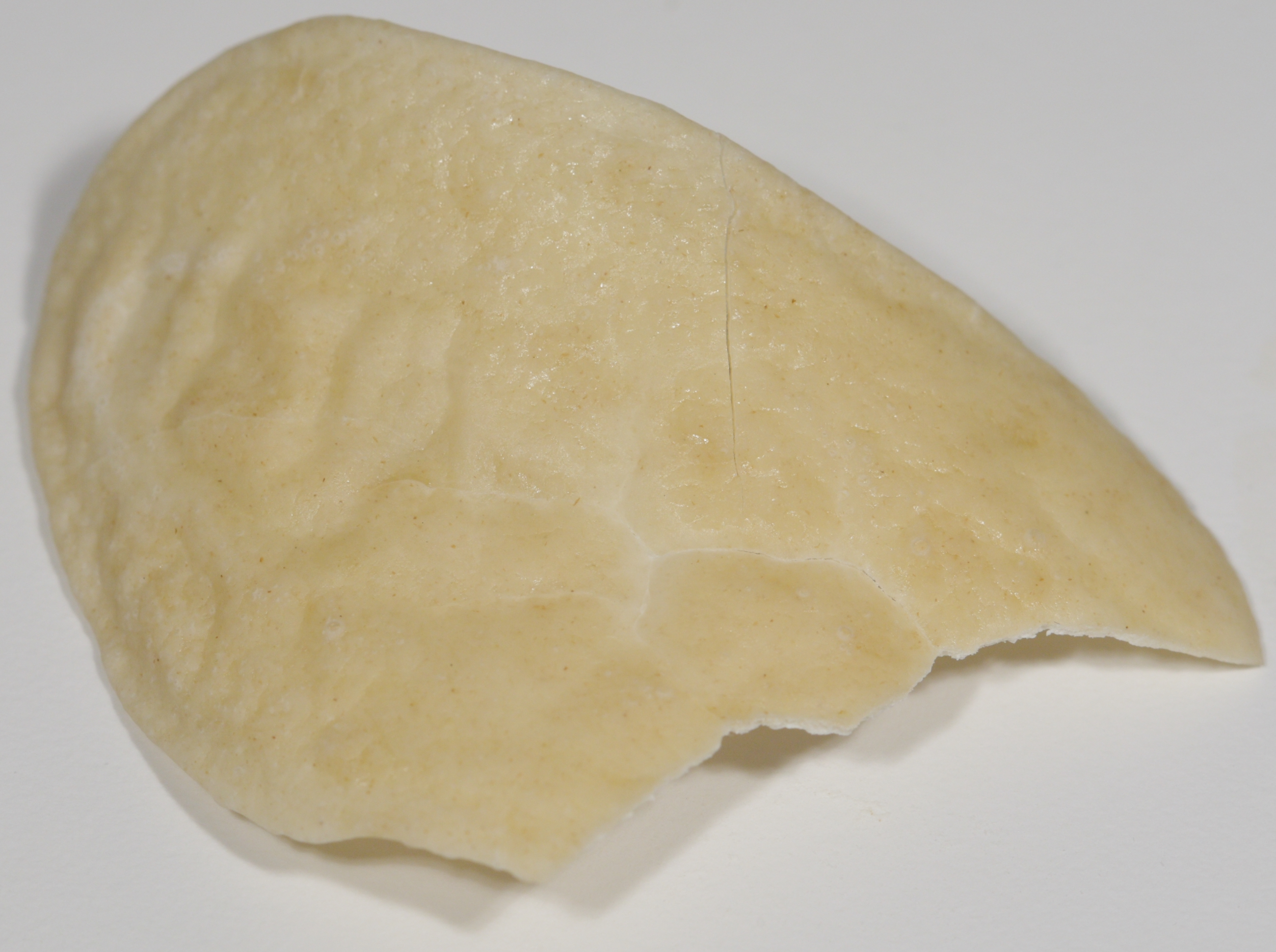
When I went to turn on the oven to 500, I noticed this sourdough chip laying in the dripping pan. My last batch of sourdough starter was overly expansionistic and I forgot about its escapees. Millions of them gave their lives to become this chip.

Roasted sweet potatoes

roasted sweet potatoes

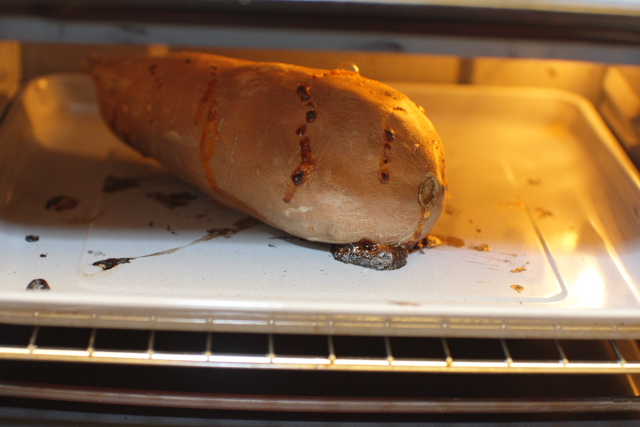
Lately I have been experimenting with sweet potatoes. My current recipe for making them uses two main ingredients: the potatoes themselves and caramel. The first step is to cook the potatoes in an oven. I use my convection toaster oven set to 350 or so and leave them in for an hour… ish. Make sure that you poke holes in the potatoes you really don’t want those suckers to explode in your oven. I’ve had that happen and its not pretty.

While the potatoes are cooking, make the caramel. At its most basic level all it really involves is to toast some sugar and pour some heavy cream in to smooth it out. But there are multiple ways of doing this. I usually do the dry method. Which is to pour sugar into a nonstick skillet and heat it until it liquefies and turns brown. But this method is prone to scorching. Another way is the wet method. Add water to the sugar and boil it until the water evaporates. By then, the sugar will have melted and you can continue boiling until the sugar caramelizes nicely. But this method has a risk of crystals forming. You have to babysit the pan and wet or grease the sides down to discourage crystallization.
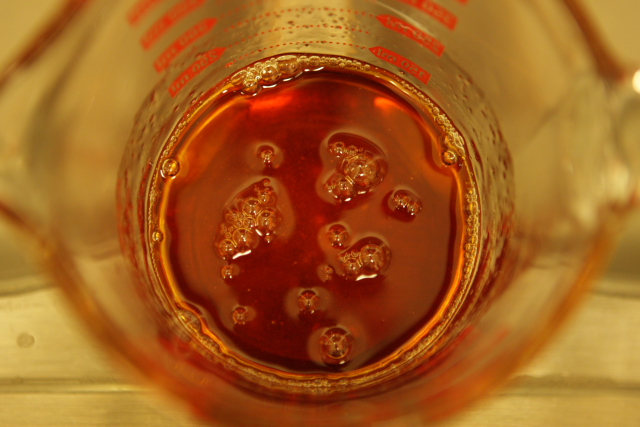
caramelized sugar

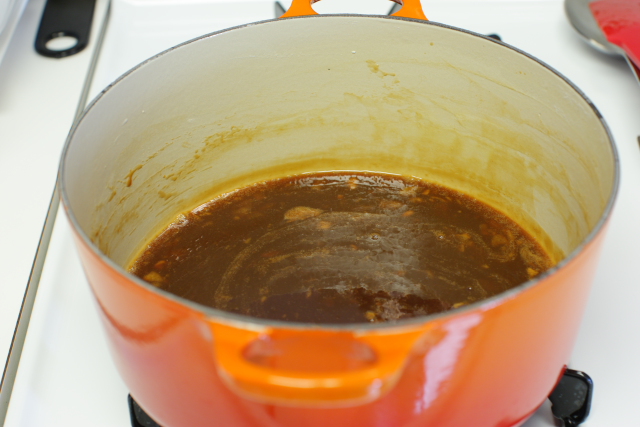
I tried a new method recommended by one of my favorite cookbook authors: Shirley Corriher. This is to use a microwave. To prevent crystals from forming, Corriher explains that the substance must be impure. The impurities that you can add to the caramel come in different forms of sugar. Table sugar is a double sugar which consists of fructose and glucose that are joined together. By adding corn syrup (mostly glucose) and by adding lemon juice (an acid which cuts the sugar into fructose and glucose), you have a mixture of three kinds of sugar. These molecules are different enough to prevent crystallization.

In a microwave safe pyrex bowl, add 1 cup of sugar, 1/2 cup of corn syrup, and 10 drops of lemon juice. Thoroughly mix together (adding a little bit of water if needed). Microwave on high for a couple of minutes until the mixture starts bubbling. Now, closely watch it until it turns light brown. When it does, turn off the microwave! Carryover cooking will continue to brown the mixture. Keep in mind that this liquid sugar is close to 250 degrees Fahrenheit.
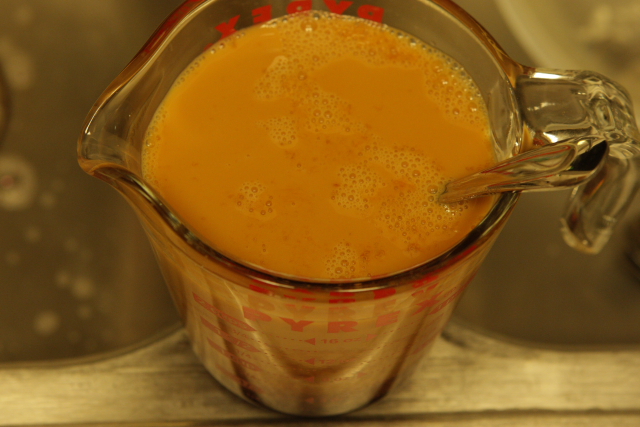
final caramel

Next add heavy whipping cream. But this time I used evaporated whole milk. This is by far the hardest part. In a saucepan, boil the cream (or evaporated milk). Pour the still molten sugar in and step back. That cream will bubble furiously! And the sugar will instantly harden rock solid. Turn off the heat and stir the mixture. Eventually, if you work hard enough, the sugar will melt back into the liquid. Also be aware that if you use water rather than cream or milk that you are creating an exothermic reaction. The mixture will actually heat up. And another thing to keep in mind, perhaps the most important thing, is that the stages of sugar cooking are rather thin. The firm ball stage of sugar syrup is from 244 to 248 degrees Fahrenheit. Not a very large margin of error.

You can make the caramel ahead of time. And you can let the potatoes cool down for a while. Or even cook them ahead of time as well. All you need to do is to whip up the potatoes and add whatever amount of caramel you want. And if you are A. R. enough, you can strain the sweet potatoes through a food mill to help reduce the stringy fibers. Don’t forget to add salt and pepper while you mix it…

The final result is a medley of roasted notes. The roasted sugars in the potatoes, the roasted sugar in the caramel, and the roasted milk sugars from the evaporated milk.

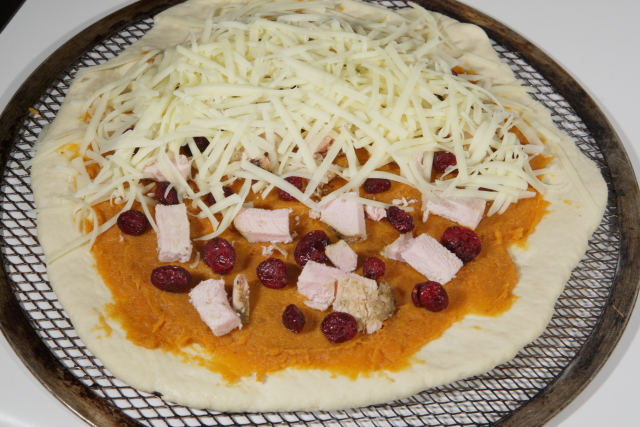
A Thanksgiving pizza

Turkey pizza

I haven’t made a pizza in a while now… its about time to experiment! This time, I am in the mood some Thanksgiving meal in pizza form. To me, the quintessential Thanksgiving food is turkey, sweet potatoes, stuffing, and cranberry sauce. So I decide to spread my roasted sweet potato puree instead of tomato sauce. For the turkey, I chopped up some leftover Rudy’s smoked turkey. I quavered on whether to put stuffing on or not. In the end, I decided not to. But I did sprinkle on some dried cranberries.

The results turned out to be better than I imagined. The individual flavors were not out of balance and melded beautifully. Next time I will add the stuffing in some form. I think that maybe croûtons would work. The steam generated by the cooking would soften them up…